.png)

Manuel Aragon Is Shaping the Future of Smarter Financial Leadership
A new generation of financial leadership is emerging where strategic thinking, financial literacy, purpose, and influence converge.
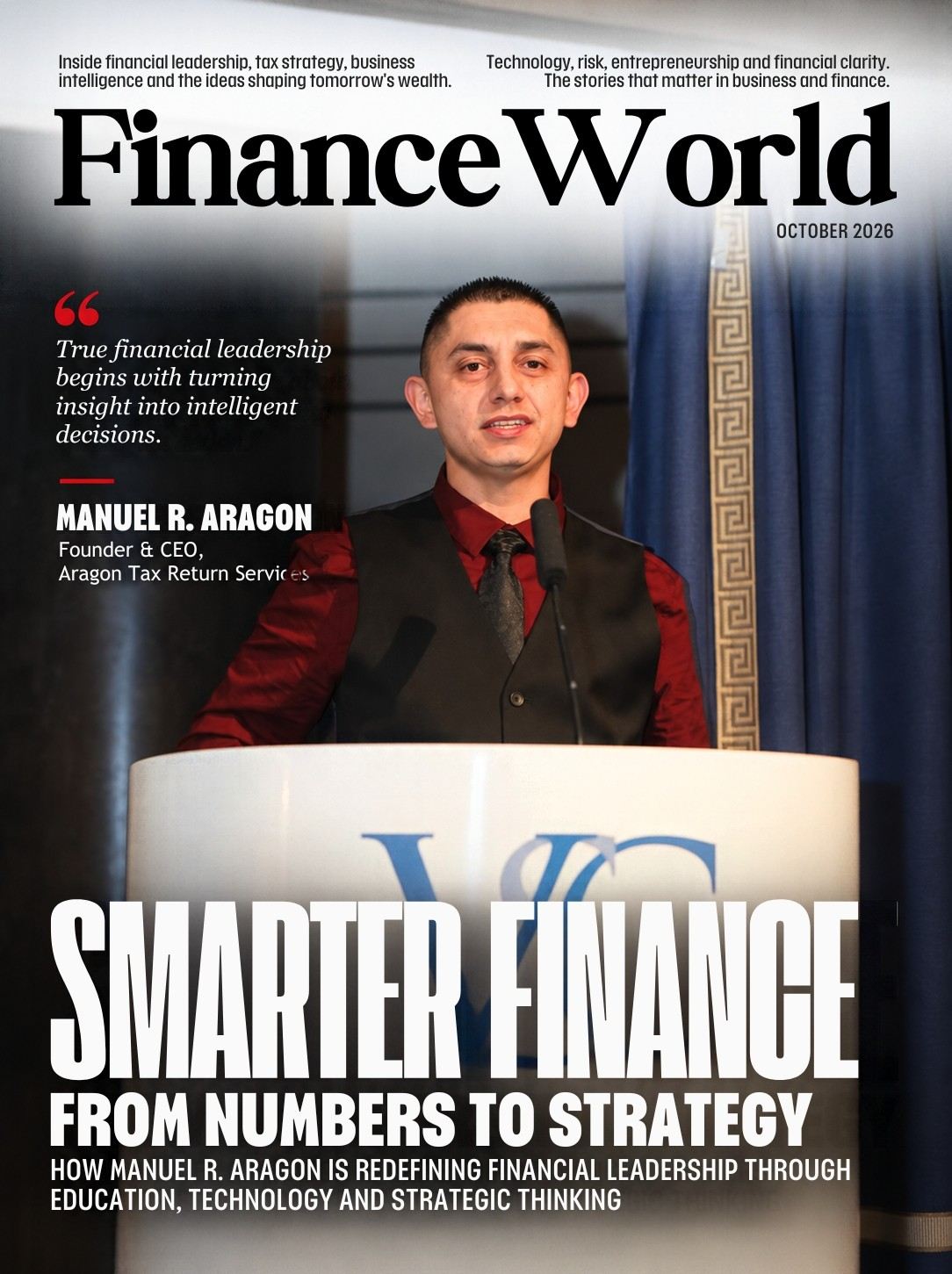
The strongest financial leaders understand that money is only one part of the equation. Capital can build companies, technology can accelerate them, and strategy can determine their direction—but leadership determines what those resources ultimately make possible.
For Manuel R. Aragon, that distinction has become central to his professional philosophy.
As founder and CEO of Aragon Tax Return Services, Aragon has built his career around finance, taxation, financial education, and entrepreneurship. But his vision extends beyond the mechanics of accounting. He views financial knowledge as a form of empowerment and leadership as an obligation to use that knowledge to create better opportunities for others.
That philosophy is rooted in an unconventional beginning.
While pursuing his education in accounting, Aragon began preparing tax returns for family and friends. What started as a modest side venture introduced him to a much larger problem: people often had access to financial information without truly understanding it. The questions surrounding a tax return were rarely just about deductions or forms. They were about uncertainty, opportunity, planning, and the future.
Aragon began to see numbers differently.
A financial statement was not simply a record. It was a narrative.
Revenue could reveal momentum, but cash flow could reveal pressure. Profitability could signal strength, while liabilities could expose vulnerability. Tax obligations could influence strategic decisions, and operational choices could reshape the financial position of an entire organization.
That perspective helped shape Aragon Tax Return Services into more than a traditional tax practice.
Aragon's approach places education at the center of client relationships. His objective is not merely to complete financial work but to help clients understand the reasoning behind their numbers so they can make more informed decisions. His professional development as a Certified Bookkeeper and Electronic Return Originator, combined with his work as a bestselling author, reflects that broader commitment to financial literacy.
But finance is only one part of Aragon's definition of leadership.
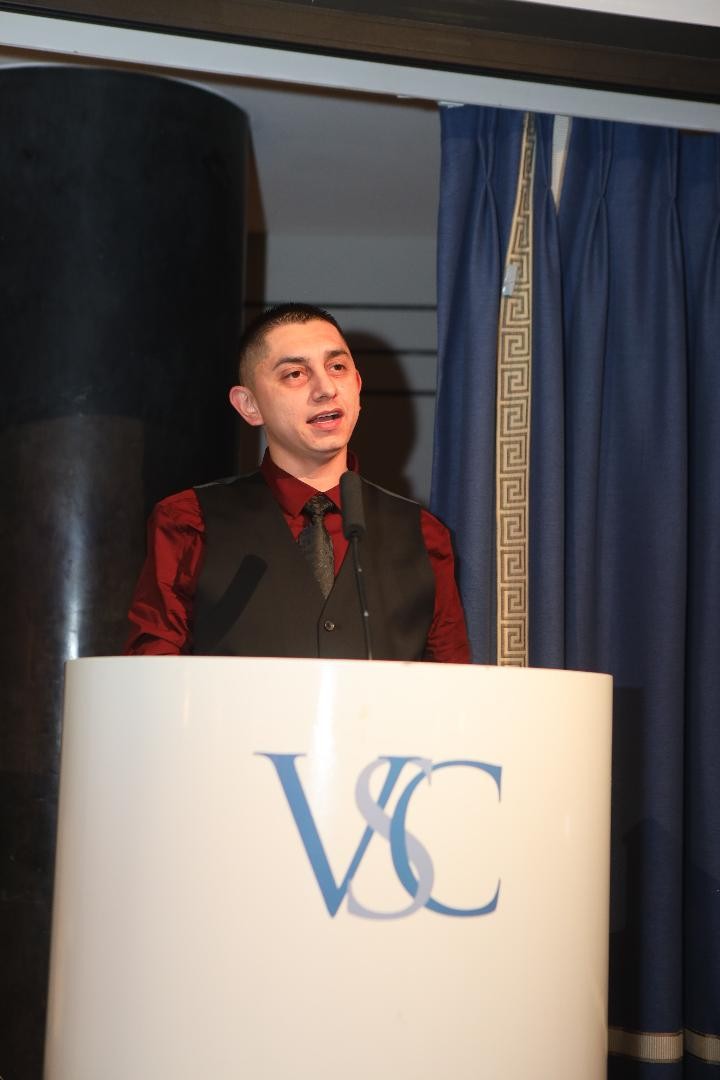
At a leadership gathering where he addressed fellow professionals, he reflected on his own journey by remembering a time when he was a lost young person sitting at a bus stop, unsure of what leadership even meant. The contrast between that earlier uncertainty and the leader standing before the audience became a central message: achievement matters, but what leaders do with their knowledge matters more.
Drawing inspiration from figures including Dr. Martin Luther King Jr., César Chávez, and Malala Yousafzai, Aragon emphasized the relationship between education, character, and opportunity.
His message was particularly relevant to the next generation.
Today's young people have access to technologies and educational tools that previous generations could not have imagined. But access alone is not enough. Someone has to provide guidance. Someone has to open doors. Someone has to demonstrate that circumstances do not have to determine destiny.
For Aragon, that is where leadership becomes personal.
He challenged fellow leaders to think beyond titles and accolades and to consider whether their influence was creating meaningful change. His message was not centered on accumulating recognition, but on using relationships, knowledge, and influence to give others better options.
That philosophy closely mirrors his approach to finance.
Financial literacy can create options.
Understanding money can create confidence. Understanding business finances can create better decisions. Understanding taxation can prevent costly mistakes. Understanding investment, cash flow, and risk can give entrepreneurs the ability to think beyond the immediate moment.
In that sense, financial education becomes a leadership tool.
Aragon's broader entrepreneurial experience has reinforced that belief. Through Aragon Distribution LLC and his work connected to Select New Mexico, he has operated beyond the traditional boundaries of tax and accounting, gaining exposure to distribution, supply chains, logistics, retail relationships, and business operations. That experience has strengthened his understanding that financial strategy ultimately has to work in the real world.
The numbers may identify the opportunity.
Execution determines whether it becomes reality.
That connection is increasingly important as technology reshapes finance. Automation, cloud platforms, artificial intelligence, digital workflows, and cybersecurity are changing how financial professionals operate. Aragon has embraced technology as a way to improve efficiency while maintaining the human relationship at the center of financial services.
His view is clear: technology can process information, but leadership must determine what that information means.
That distinction could define the next generation of financial professionals.
As artificial intelligence becomes capable of handling increasingly sophisticated calculations and compliance functions, the value of human judgment may become even more important. The professionals who stand apart will not simply be those who know the numbers. They will be those who can interpret them, communicate them, and connect them to strategy.
Aragon's own leadership principles—integrity, adaptability, and purpose—fit directly into that changing environment. He sees integrity as foundational to trust, adaptability as necessary for surviving constant change, and purpose as the force that keeps leadership connected to something larger than short-term success.
His definition of success is therefore broader than financial performance.
In his leadership speech, Aragon challenged his audience with questions about what comes next, what kind of world leaders are prepared to build, whether they are willing to care about something larger than themselves, and whether they are prepared to use their influence responsibly.
His most powerful point was also one of his simplest: legacy should not be measured only by money in the bank or awards collecting dust.
It should be measured by the potential a person unleashes in others.
That philosophy gives his financial career a larger dimension.
A tax professional can help someone comply with the rules. A financial advisor can help someone understand an opportunity. An entrepreneur can build a company. But a leader can potentially do all three while creating pathways for other people to succeed.
That is the larger ambition behind Aragon's work.
His commitment to financial literacy, mentorship, authorship, and entrepreneurship reflects a belief that knowledge becomes most valuable when it is shared. He encourages emerging entrepreneurs to start small, remain consistent, continue learning, and protect trust as one of their most valuable assets.
The philosophy is particularly relevant in a world where financial inequality, technological disruption, and economic complexity are reshaping opportunities for the next generation.
Aragon believes leaders have a responsibility to give people better options.
That responsibility begins with education.
It continues through opportunity.
And ultimately, it is measured through impact.
For Manuel R. Aragon, finance is therefore not simply about calculating what something is worth. It is about understanding what can be built with the knowledge, resources, and opportunities available.
His career has evolved from preparing tax returns for people close to him into building a nationwide financial-services practice, developing entrepreneurial ventures, writing about financial literacy, and speaking about leadership and human potential.
The common thread is knowledge.
But the destination is impact.
Aragon's message to fellow leaders was ultimately a challenge: the world is not waiting for a miracle. It is waiting for people willing to accept responsibility for what they can create.
That belief may be the most revealing part of his professional story.
Because the future of finance will not be defined only by balance sheets, algorithms, or capital.
It will also be defined by the people who understand that financial intelligence creates influence—and that influence carries responsibility.
For Manuel R. Aragon, leadership is a choice.
Learning is a privilege.
And legacy is what happens when knowledge is transformed into opportunity for someone else.
Follow Manuel Aragon
Instagram: @manuelaragon_aragontaxservices
LinkedIn: Manuel Aragon